In the ever-evolving landscape of digital marketing, the stakes have never been higher. With global digital advertising spend projected to hit $786.2 billion by 2026, businesses are under pressure to justify their marketing investments with tangible ROI. Yet, the path to achieving this is fraught with challenges—from adapting to AI-driven SEO trends to navigating complex privacy regulations. How can your company not just survive, but thrive in this environment? This article delves into the core issues marketers face today, offering strategic insights and solutions to harness the power of AI, prioritize emerging trends, and integrate these technologies into your marketing arsenal. Welcome to a journey where measurable growth is not just a possibility, but an expectation.
The ROI Conundrum: Measuring Success in a Complex Landscape
Digital marketing ROI is becoming increasingly challenging to quantify due to the complexity of customer journeys. With multiple touchpoints across platforms, attributing value to each interaction can seem like an unsolvable puzzle. Traditional metrics such as Customer Acquisition Cost (CAC) and Lifetime Value (LTV) still hold relevance, but they need to be part of a broader framework that incorporates AI insights and predictive analytics. As AI adoption grows, with 75% of marketers reportedly utilizing AI, businesses must pivot to more sophisticated tools like Google Analytics 4 and HubSpot Marketing Hub to capture accurate data and derive actionable insights.
While measuring ROI is a formidable challenge, the rise of AI-driven SEO strategies presents new opportunities for businesses willing to innovate.
Navigating the AI-Driven SEO Landscape

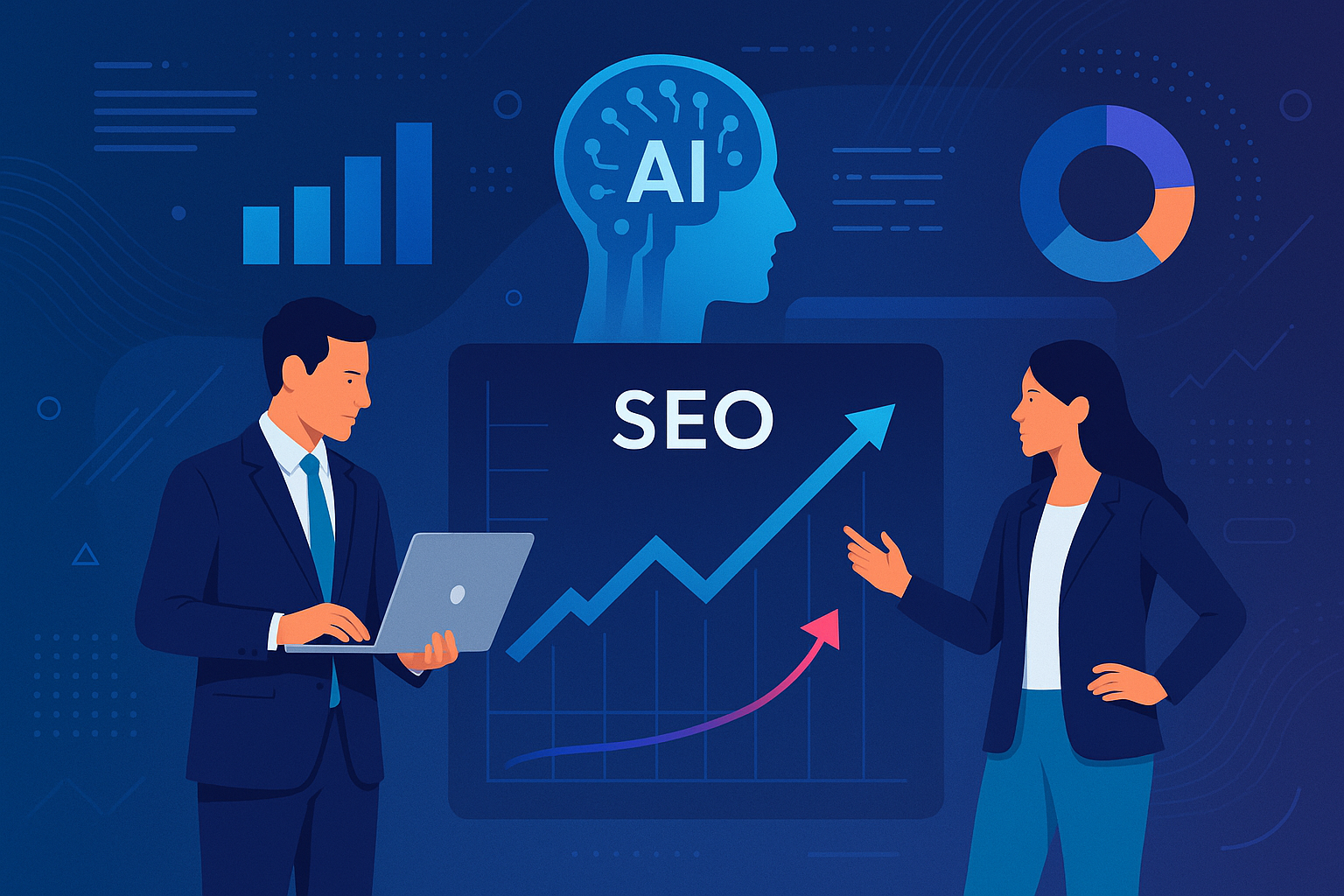
AI-driven SEO is reshaping how businesses optimize for search engines. With over 50% of Google searches now showing an AI Overview, adapting to these algorithms is crucial. However, implementation is not without its hurdles, such as data integration challenges and algorithmic biases. Companies need to focus on cohesive data strategies and utilize tools like SEMrush and Ahrefs to stay ahead. Successful AI-driven SEO requires a delicate balance between technical optimization and content relevance, ensuring that AI enhances rather than hinders your search visibility.
As AI-driven SEO becomes a norm, emerging trends in digital marketing offer new avenues for growth and competitive advantage.
Emerging Digital Marketing Trends to Prioritize

To stay competitive, executives must prioritize emerging trends such as conversational search, video commerce, and privacy-first marketing. Conversational search is transforming how users interact with search engines, demanding content that answers questions naturally. Meanwhile, video commerce is gaining traction as short-form video and interactive content dominate engagement metrics, offering a new frontier for consumer interaction. Furthermore, privacy regulations are reshaping data collection strategies, and a shift towards first-party data strategies is essential.
These trends not only offer opportunities but also necessitate careful integration of AI tools into existing workflows to maximize their potential.
Integrating AI Tools into Marketing Workflows

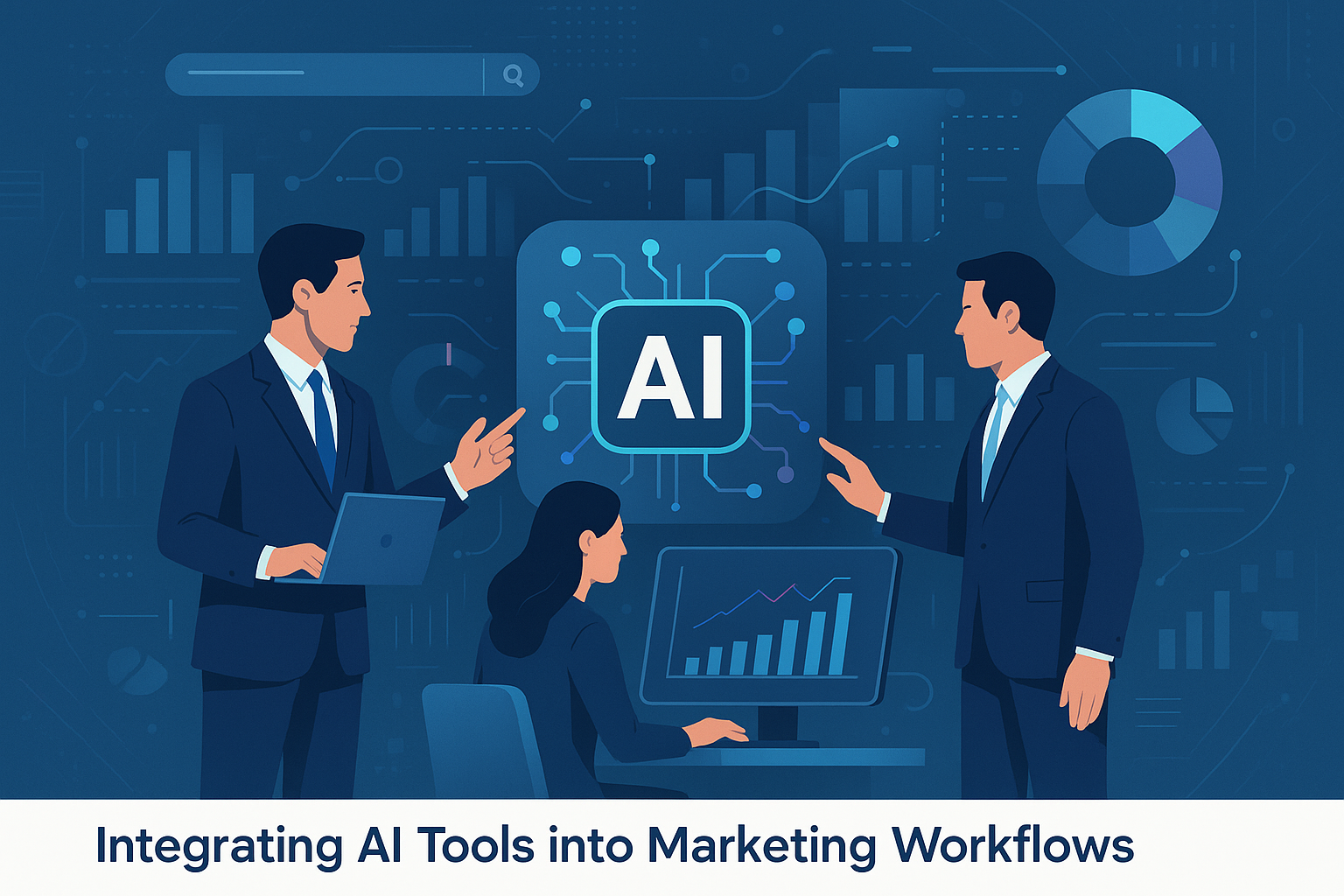
Successfully integrating AI tools into existing marketing workflows is critical to leveraging their full potential. This integration involves not only technological adjustments but also shifts in organizational culture and processes. The key is to start with pilot projects that demonstrate quick wins, gradually scaling AI capabilities across the organization. Collaboration between marketing, IT, and data analytics teams is essential to break down silos and foster a data-driven culture. Solutions like HubSpot Marketing Hub can provide a comprehensive suite for integration, ensuring seamless operation without disrupting current workflows.
Once AI tools are integrated successfully, businesses can focus on optimizing and scaling their digital marketing efforts for maximum ROI.
Optimizing and Scaling for Maximum ROI
Achieving maximum ROI requires ongoing optimization and scaling of digital marketing strategies. This involves continuous testing and refining of campaigns, leveraging AI for predictive analytics to forecast trends and customer behaviors. Marketing mix modeling can provide insights into the effectiveness of various channels, helping to allocate resources efficiently. By maintaining a flexible strategy that adapts to market changes and new technologies, businesses can ensure sustained growth and competitive advantage.
With a solid foundation and optimized strategies, companies are well-positioned to implement practical frameworks that drive success.
The 5-Phase AI Integration Roadmap
This framework provides a structured approach to integrating AI tools into your marketing workflows, ensuring minimal disruption and maximum effectiveness.
Assess Current Capabilities
Evaluate existing marketing workflows and identify areas for AI enhancement.
Pilot AI Projects
Implement small-scale AI projects to test effectiveness and gather insights.
Scale AI Integration
Expand successful AI initiatives across the organization.
Foster Cross-Department Collaboration
Encourage collaboration between marketing, IT, and analytics teams.
Optimize and Refine Strategies
Frequently Asked Questions
QHow can businesses measure the ROI of AI-driven digital marketing?
QWhat challenges do companies face with AI-driven SEO?
QWhich emerging trends offer the highest ROI potential?
QHow do privacy regulations impact digital marketing?
Conclusion
In the dynamic field of digital marketing, leveraging AI-driven strategies is no longer optional; it's essential. By focusing on AI-driven SEO, emerging marketing trends, and robust measurement frameworks, businesses can achieve significant growth and competitive advantage.
Key Takeaways
- ✓Prioritize AI-driven SEO for improved search visibility.
- ✓Develop comprehensive frameworks for measuring marketing ROI.
- ✓Embrace emerging trends like conversational search and video commerce.
- ✓Adapt to privacy regulations with first-party data strategies.
- ✓Integrate AI tools seamlessly into existing workflows for maximum impact.
Next Steps
Evaluate your current marketing strategies and identify areas where AI and emerging trends can add value. Consider engaging Quicklook for expert guidance in implementing these strategies.
Quicklook has helped dozens of companies unlock measurable growth through data-driven marketing. Contact us to learn more about how we can assist you.