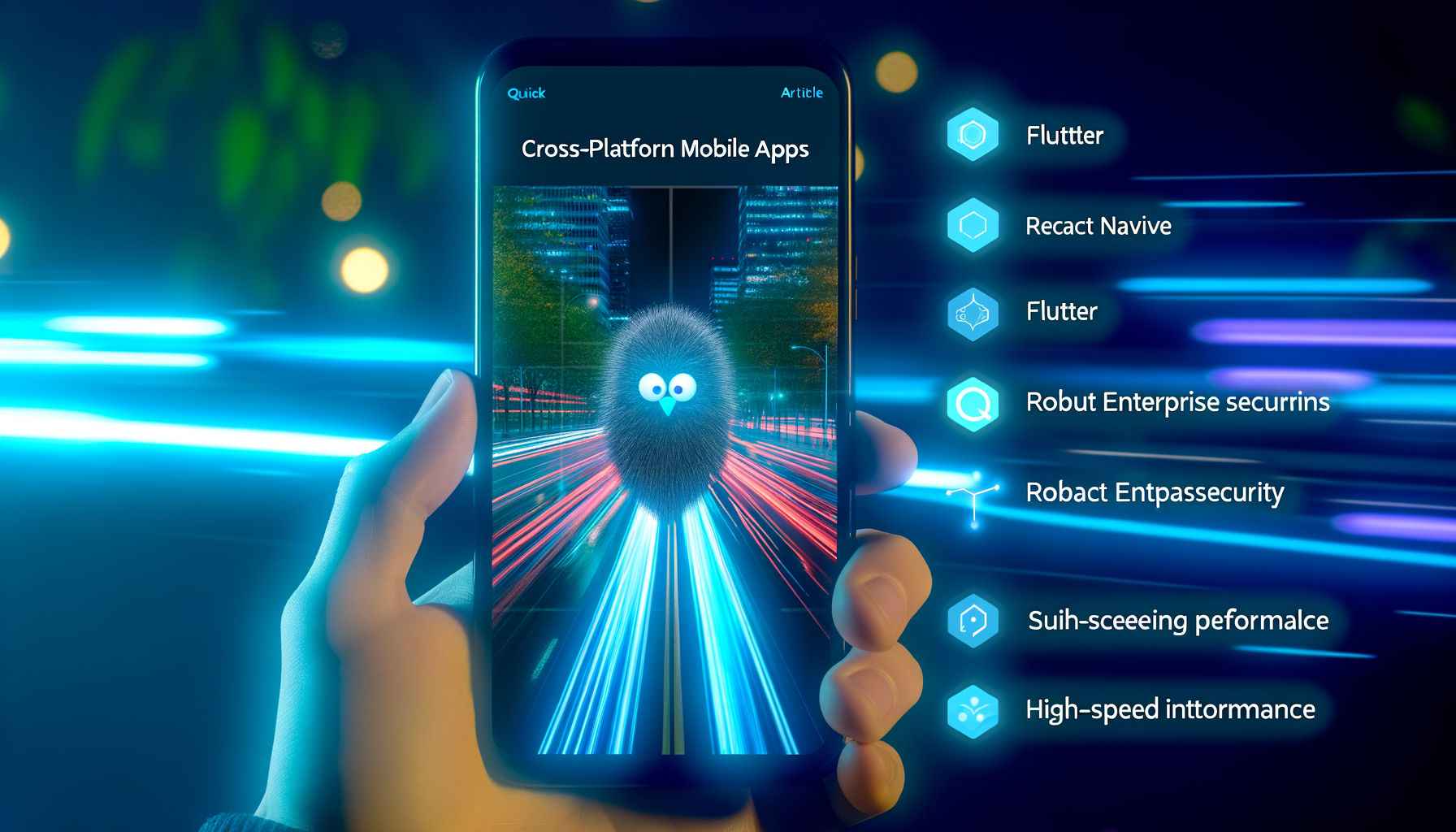

In today's hyper-connected world, mobile apps are no longer a luxury; they're a necessity for businesses aiming to remain competitive. Yet, developing separate apps for iOS and Android can be both costly and time-consuming. Enter cross-platform mobile app development—a strategy that allows you to build once and deploy everywhere. With frameworks like Flutter and React Native, and enhanced by AI integration, businesses can significantly cut development time and costs while delivering a seamless user experience across devices. Let's dive into the future-proof strategies that can elevate your digital transformation journey.
Why Cross-Platform Mobile Apps?

App development team discussing strategy with code snippets on a screen.
Cross-platform mobile apps offer a unified solution for businesses aiming to maximize reach without multiplying development efforts. By leveraging a single codebase, companies can simultaneously target iOS and Android users, cutting down on costs and ensuring consistent performance across platforms.
A case in point is the success of apps like Airbnb, which adopted React Native to streamline their development process. This approach reduced Airbnb's engineering workload and improved app maintenance, proving that cross-platform solutions are not just viable but advantageous.
Moreover, the Pacific Northwest, with its burgeoning tech scene, is witnessing a surge in demand for cross-platform apps. Local businesses are increasingly turning to Quicklook for bespoke app solutions that align with their growth objectives.