
Written by Quicklook · Sep 1, 2026 · 17 min read · 3,211 words
Source Code Is Not an Exit Plan: Lock-In Terms to Set Before Hiring a Software Studio
Before hiring a software studio, require clear code and data rights, repository access, handoff documentation, open interfaces, and a testable exit plan.

TL;DR
Do not hire a custom software development company unless the contract gives your organization a practical way to operate, maintain, and transfer the application without that company. Ownership language matters, but it is not enough. Require ongoing repository access, defined IP and data rights, reproducible build and deployment assets, architecture and interface documentation, objective acceptance tests, periodic delivery, and written transition rights. Put those requirements in the statement of work before vendor selection—not in a handoff discussion after the application is built.
A contract can say that you own the software and still leave you dependent on the studio that built it. If only that studio can access the repository, reproduce a release, understand the integrations, export the data, or deploy the application, ownership exists mostly on paper.
The buying decision is straightforward: hire only a studio willing to make your exit path part of the delivery plan. That does not mean planning for the relationship to fail. It means preserving your ability to change maintainers, bring work in-house, or keep the application running if circumstances change.
Quicklook is a Beaverton studio that builds custom applications a team can inspect, run, and keep. That idea should become a set of concrete contract requirements. Source-code custody, documentation, build assets, interface definitions, acceptance criteria, and transition obligations all need owners, delivery dates, and tests.
1. Define ownership, licenses, and data rights asset by asset
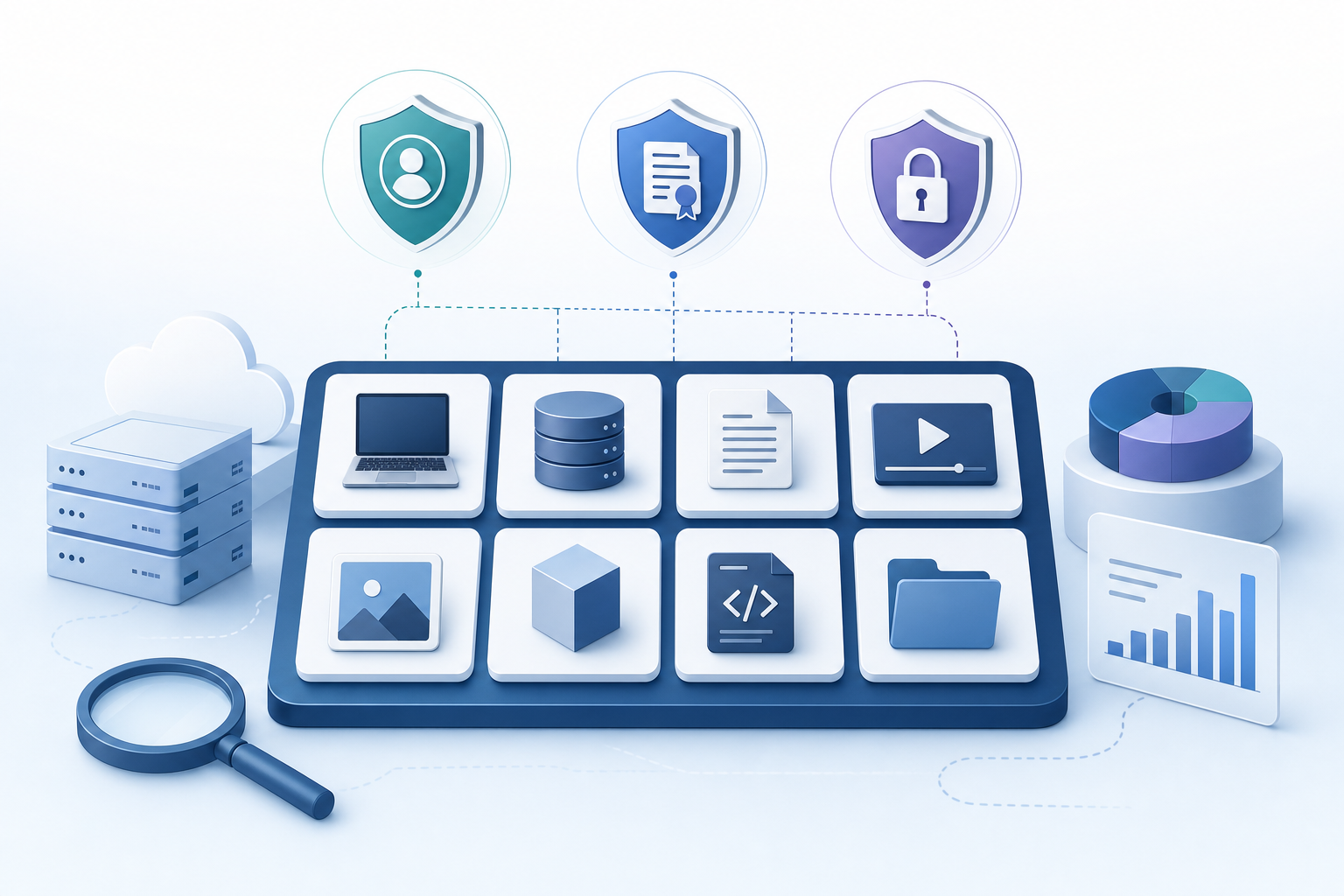
Avoid a vague sentence such as “the customer owns the final product.” A custom application is a collection of assets, and the contract should say what happens to each one.
Create a rights schedule covering custom source code, compiled software, configuration, database structures, documentation, tests, automation scripts, architecture materials, interface definitions, and any design or operational files required to maintain the application. For each asset, identify who owns it, when it is delivered, the format of delivery, and whether the buyer may inspect, copy, modify, deploy, and give it to a replacement studio.
Separate newly commissioned work from the studio’s pre-existing tools and third-party components. A studio may reasonably retain reusable background materials, but the buyer still needs a durable license broad enough to run and modify the delivered application without returning to the original studio for permission. Third-party dependencies should be listed with their applicable licenses and restrictions.
Data needs its own terms. Define who controls application data, available export formats, how quickly an export must be provided, what metadata is included, and what deletion or return obligations apply after termination. If the application cannot leave with its usable data, the buyer does not have a meaningful exit.
Have qualified counsel review the final language. The operational team should first produce the asset list and explain what it needs to keep the system running; legal language cannot repair an incomplete technical inventory.
Key Points
- •Replace general ownership language with an asset-by-asset rights schedule.
- •State whether the buyer can inspect, copy, modify, deploy, and transfer each deliverable to another maintainer.
- •Distinguish commissioned code from pre-existing studio tools and third-party dependencies.
- •Define data extraction, delivery format, return, deletion, and post-termination rights before signing.
- •Do not postpone ownership and reuse decisions until final handoff.
Data & Statistics
2. Require code custody during the project, not a final ZIP file
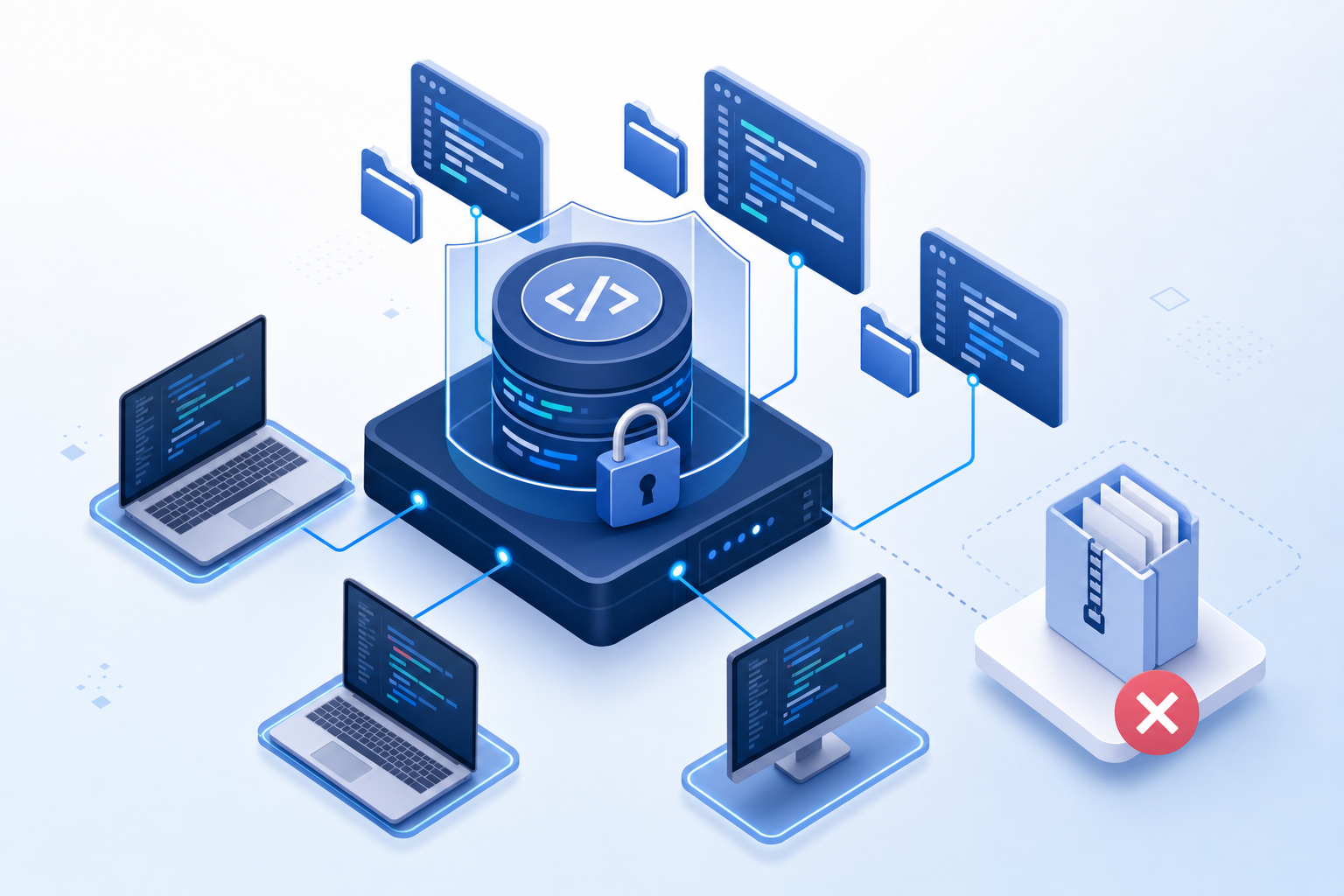
Source-code delivery should be continuous enough that the buyer is never one dispute, closure, or missed invoice away from losing access to current work.
The strongest arrangement gives the buyer direct, ongoing access to the working repository. The contract should identify the repository, the buyer accounts entitled to access it, what history and branches are included, how often changes must be pushed, and how the buyer receives a usable copy if the repository is hosted by the studio.
Periodic delivery matters because a promise to transfer source code at the end leaves the buyer exposed throughout development. Tie delivery to short, named milestones. Each delivery should correspond to an identifiable version and include the related documentation, tests, dependencies, and build materials—not an unexplained collection of files.
Escrow is a fallback when direct delivery is genuinely infeasible, not a substitute for ordinary visibility. If escrow is used, specify deposit frequency, required contents, verification, release triggers, and the buyer’s rights after release. An escrow deposit that has never been tested may contain code that cannot be built or deployed.
Transition terms should also be priced and timed before the project starts. Define the assistance period, expected studio availability, knowledge-transfer sessions, required exports, and the rate or fixed price for approved transition work. Otherwise, the buyer may have to negotiate the cost of leaving at the moment it has the least leverage.
Key Points
- •Require direct repository access or frequent, contractually defined delivery throughout development.
- •Make each source delivery correspond to a version that can be identified and tested.
- •Include repository history, build materials, documentation, dependencies, and tests—not source files alone.
- •Use source-code escrow only when normal repository access or delivery is not feasible.
- •Set transition timing, deliverables, responsibilities, and pricing before an exit occurs.
Data & Statistics
3. Treat maintainability as a deliverable with an acceptance test
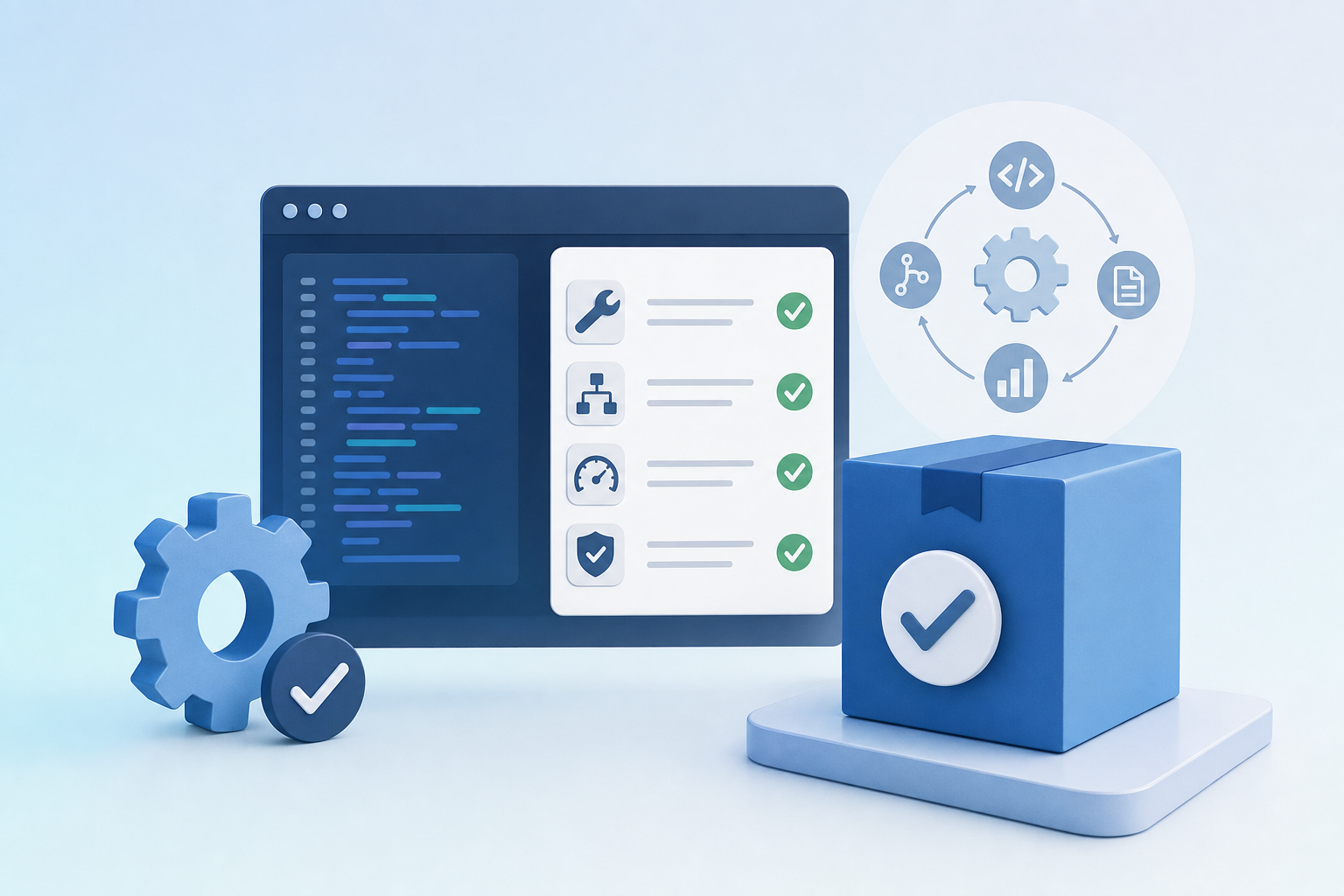
Receiving source code does not prove that another qualified team can work with it. The handoff package needs enough information and automation to reproduce the software and understand its operating boundaries.
At minimum, require build procedures, dependency and library information, automation scripts, database materials, test suites and results, architecture documentation, interface definitions, deployment instructions, operating guidance, and training materials appropriate to the application. The exact list should reflect the system rather than a generic documentation promise.
Documentation should answer real maintenance questions: What services make up the application? Which external systems does it call? How are environments configured? How is a release produced? How are database changes applied? How are failed jobs or integrations diagnosed? Which assumptions are embedded in the workflow? A stack diagram and a generated API reference may help, but neither replaces operating knowledge.
Make the handoff testable. A practical acceptance exercise can require an authorized technical reviewer—without relying on undocumented help from the original developer—to obtain the contracted materials, build the specified version, run its tests, deploy it to an agreed environment, and complete a representative maintenance task. Any missing instruction or inaccessible dependency becomes an acceptance issue rather than a surprise during transition.
Documentation also needs an update rule. Name the materials that must change when architecture, interfaces, deployment procedures, or operational assumptions change. A polished handoff packet created once and allowed to drift is not a maintainable handoff.
Key Points
- •Define the handoff package in the statement of work instead of asking broadly for “documentation.”
- •Require the assets needed to build, test, deploy, operate, and modify the application.
- •Use an independent build-and-deploy exercise as an acceptance test.
- •Test whether a qualified person can complete a representative maintenance change from the delivered materials.
- •Require documentation updates when the corresponding software or operating process changes.
Data & Statistics
4. Preserve replaceability through documented interfaces and modular commitments
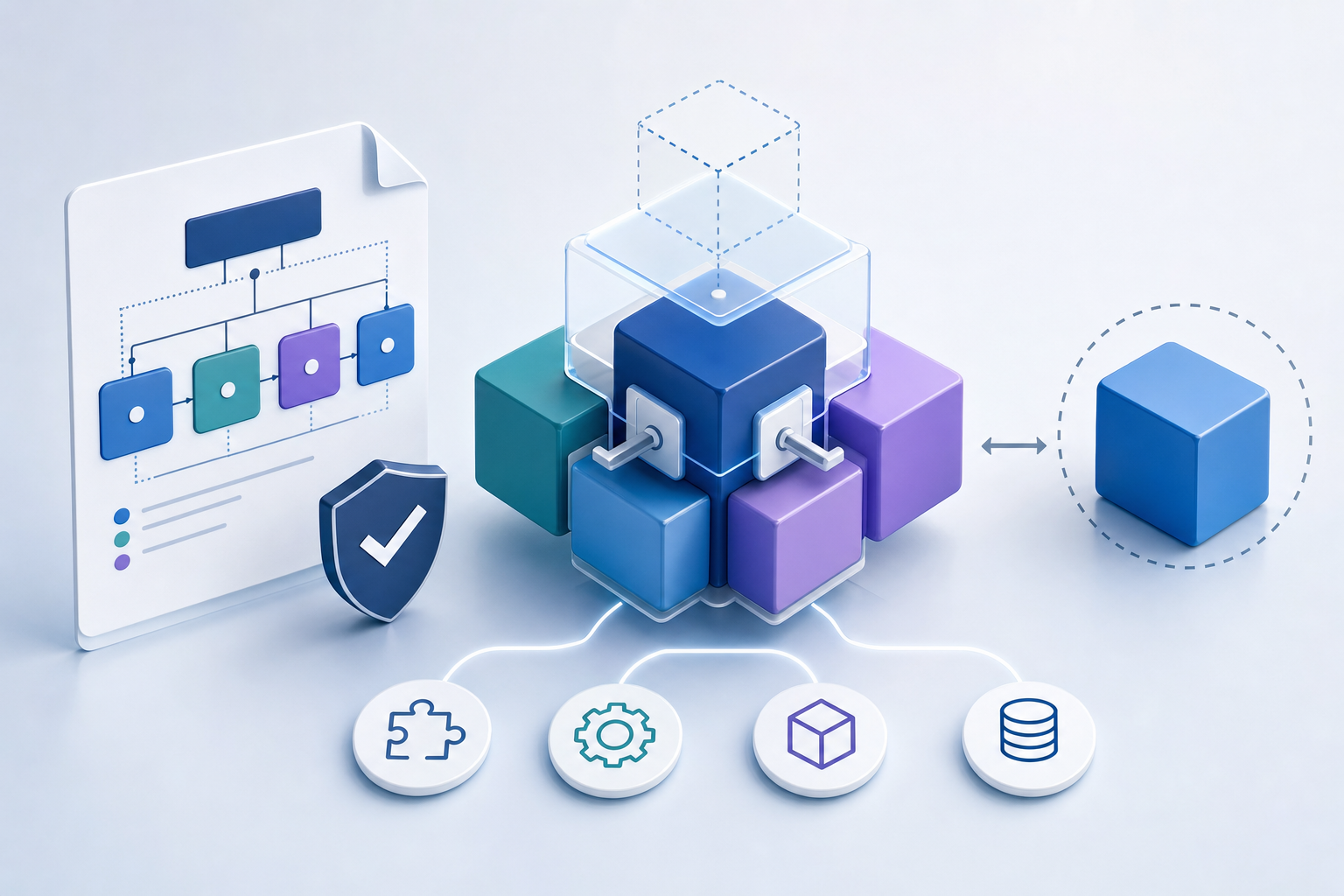
Lock-in often hides at system boundaries. A buyer may possess the application repository but remain dependent on undocumented integration behavior, proprietary data formats, or components that cannot be replaced independently.
Require interface definitions for the application’s meaningful boundaries. The documentation should identify the purpose of each interface, supported operations, data structures, authentication expectations, failure behavior, and versioning assumptions. Where practicable, favor open standards and open APIs that another qualified team can implement against. “Open” should be a verifiable technical characteristic, not a label in a proposal.
Open interfaces do not require every component to be open source. The buying question is whether the organization can obtain its data, understand the boundary, replace a component, and authorize another developer to maintain the system without needing undisclosed knowledge or new permission from the original studio.
Contract structure matters too. Divide a large initiative into increments that deliver something inspectable and workable. State the interfaces between increments and avoid language that obligates the buyer to purchase every later phase merely to receive value from the earlier work. A modular agreement gives the buyer checkpoints at which it can accept, change direction, pause, or select another studio.
Each increment should have its own deliverables, rights, repository state, documentation updates, interface definitions, acceptance criteria, and payment trigger. That turns replaceability into a repeated project condition rather than a final-phase promise.
Key Points
- •Document the boundaries between the application, external systems, and replaceable components.
- •Use open standards and open APIs where practicable, while verifying what “open” means in the proposed design.
- •Require usable data formats and enough interface information for another team to integrate or replace components.
- •Commission independently workable increments instead of one indivisible delivery.
- •Do not accept a contract that requires buying later increments merely to make earlier paid work usable.
Data & Statistics
5. Run an exit drill before selecting the studio
A vendor-lock-in clause is only useful if the proposed delivery model can satisfy it. Use the selection process to test the studio’s answer rather than relying on assurances that handoff will be easy.
Ask the studio to walk through a representative repository and explain how a buyer would build, test, deploy, and maintain that kind of application. Sensitive code can remain protected; the purpose is to inspect working habits, repository structure, documentation discipline, testing, and release procedures. Ask which parts of its standard process would occur in buyer-accessible systems and which would remain under studio control.
Then conduct a paper exit drill against the proposal:
- Can the buyer retrieve the current source and its relevant history without requesting a special favor? - Can a qualified replacement reproduce a release from documented instructions? - Are build, test, database, and deployment assets included? - Can the buyer export usable application data and associated metadata? - Are external interfaces documented well enough to continue operating them? - Are third-party licenses and restrictions identifiable? - Does each completed increment remain usable if the next increment is not purchased? - Are transition assistance, timing, cost, and knowledge transfer already defined?
Treat evasive answers as design or contracting risks. Warning signs include promising documentation only at the end, refusing all repository visibility, describing deployment as a studio-only process, leaving data export undefined, using “proprietary” without identifying the affected component, or making transition support subject to later negotiation.
The decision rule is simple: do not select the studio until a knowledgeable reviewer can trace a credible path from active development to operation by another qualified team.
Key Points
- •Evaluate the proposed working model, not just ownership language in a sample contract.
- •Ask for a repository and release-process walkthrough appropriate to the procurement.
- •Trace how source, data, documentation, interfaces, and operational knowledge would move to another team.
- •Resolve studio-controlled deployment processes and undefined transition costs before signing.
- •Reject proposals that cannot show a credible, testable path to independent operation.
Data & Statistics
The inspectable exit schedule
Attach a short, enforceable exit schedule to the statement of work. It should connect each lock-in protection to a named deliverable, delivery time, responsible party, and acceptance method. These six steps turn “no vendor lock-in” from an intention into something the buyer can verify.
1. Inventory the assets required to continue operation
List custom code, configuration, databases, data definitions, dependencies, libraries, build and deployment automation, tests, architecture materials, interface definitions, operating instructions, and training materials. Identify any studio-owned or third-party element separately.
The buyer can see what must move with the application and which dependencies require licenses, replacements, or continuing contracts.
2. Assign rights and custody
For each asset, state ownership or license rights, repository location, access permissions, delivery format, delivery frequency, and the buyer’s right to provide the material to an authorized replacement maintainer.
The buyer has both the legal authority and practical access needed to inspect, copy, operate, and modify the delivered system.
3. Define data exit requirements
Specify export formats, included metadata, delivery timing, extraction assistance, return or deletion obligations, and any post-termination access period. Test the export before final acceptance.
The organization can leave with usable information rather than an incomplete report or inaccessible proprietary format.
4. Make the build and deployment reproducible
Require instructions and automation sufficient to build a named version, run its tests, prepare its database, and deploy it to the agreed environment. Identify credentials or dependencies that cannot be transferred and define an approved replacement process.
A qualified technical team can reproduce a release without undocumented intervention by the original studio.
5. Test documentation and interfaces
Have an authorized reviewer use the delivered materials to complete a build, deployment, and representative maintenance task. Verify important interfaces, data structures, version assumptions, and failure behavior.
Documentation quality becomes an acceptance condition rather than a subjective promise.
6. Pre-negotiate transition
Define transition notice, assistance period, knowledge-transfer sessions, deliverable updates, response expectations, pricing, and the point at which studio access will be removed. Include repository or escrow arrangements appropriate to the project.
Changing maintainers remains an operational decision instead of a new negotiation conducted under pressure.
An internal operations application needs a new maintainer
An operations team commissions a custom scheduling and inspection application that exchanges data with an existing business system. The original studio later becomes unavailable for continued maintenance. Before development began, the buyer required ongoing repository access, periodic source and documentation delivery, data export, documented interfaces, build and deployment automation, third-party dependency records, and a defined transition period. Acceptance included having an authorized technical reviewer reproduce a release from the delivered materials. The organization still needs to select and onboard a replacement, but it does not need to reverse-engineer its own application or negotiate for basic access after the relationship has ended.
The contract does not guarantee a painless transition, but it preserves a credible choice: continue with the original studio, bring maintenance in-house, or authorize another qualified development company to take over.
Frequently Asked Questions
QIs owning the source code enough to avoid vendor lock-in?
QShould the repository always be under the buyer’s account?
QDoes an escrow agreement solve the lock-in problem?
QMust the application use only open-source software?
QWhat should a handoff acceptance test include?
QWhat if a studio wants to retain ownership of reusable tools?
QWhen should legal counsel become involved?
Conclusion
The safest custom software vendor is not the one that merely promises ownership at the end. It is the one willing to work under an arrangement in which the buyer can inspect current work, receive complete lifecycle assets, test the handoff, export its data, understand system interfaces, and appoint another qualified maintainer. Make those conditions part of selection, contracting, delivery, and acceptance.
Key Takeaways
- ✓Require an asset-by-asset schedule for ownership, licenses, delivery, and transfer rights.
- ✓Keep ongoing repository access or require frequent, verifiable delivery during development.
- ✓Define handoff as source code plus build, test, deployment, database, architecture, interface, and training materials.
- ✓Make independent build and deployment part of acceptance.
- ✓Use documented interfaces and independently workable increments to preserve the ability to change studios.
- ✓Pre-negotiate data exit, transition assistance, timing, and cost.
- ✓Do not hire until the proposed delivery model passes a realistic exit drill.
Next Steps
Review Quicklook’s Custom Software Development work at Custom development. If the approach fits your brief, start at Get started for one conversation about the application, its constraints, and whether Quicklook is the right studio.
Planning a custom application? Visit Get started to discuss the brief, code custody, handoff requirements, and the conditions your team will need to inspect, run, and keep the software. You can also review the offer at Custom development.