

In 2025, mobile app users expect more than just functionality; they demand seamless experiences across devices. With 58% of global internet traffic coming from mobile devices, businesses must adapt quickly (Statista, 2023). This post explores how cross-platform mobile apps, leveraging frameworks like Flutter and React Native, are crucial for modern enterprises seeking superior ROI. We'll delve into best practices, AI integration, and the impact of 5G.
The Need for Cross-Platform Development

Developers collaborating on cross-platform code.
Cross-platform mobile app development is not just a trend; it’s a necessity. With the plethora of devices available, businesses need solutions that provide consistent user experiences across iOS and Android without doubling the workload. This approach substantially reduces time-to-market and costs, a critical factor for Pacific Northwest enterprises aiming to innovate swiftly.
Companies like Quicklook leverage their expertise to bridge the gap between functionality and user experience. By adopting cross-platform strategies, businesses can ensure their apps are not only scalable but also future-proof, ready to integrate emerging technologies seamlessly.
LIST
- •Reduced development costs
- •Faster time to market
- •Unified user experience
Top Frameworks for 2025
Flutter and React Native Lead the Way

Comparison chart of Flutter and React Native features.
Flutter and React Native are emerging as the go-to frameworks for cross-platform development. Flutter's rich widgets and fast rendering engine make it an excellent choice for creating visually stunning apps, while React Native offers a more mature ecosystem with robust community support.
Both frameworks enable code reuse across platforms, significantly cutting down on development time and costs. They also support hot-reloading, allowing developers to see changes in real-time, enhancing productivity and innovation.
QUOTE
Using Flutter, our team reduced development time by 30% while maintaining flexibility.
AI and Machine Learning in Mobile Apps

AI-powered mobile app interface concept.
AI and machine learning are transforming how apps interact with users. Incorporating AI can personalize user experiences, automate tasks, and even predict user behaviors. Tools like TensorFlow Lite and Core ML are popular for integrating AI into mobile apps, providing powerful solutions right at your fingertips.
By integrating AI, cross-platform apps can offer features like voice recognition, image processing, and recommendation engines, which are vital for enhancing user engagement and satisfaction.
CALLOUT
AI integration can boost app user retention by up to 20%, according to recent studies.
5G: Revolutionizing Mobile App Experiences

Diagram of 5G impact on mobile app capabilities.
5G technology is not just about speed—it's about enabling new possibilities. With its low latency and high bandwidth, 5G can power augmented reality (AR) applications and real-time data processing, setting new standards for mobile app performance.
For businesses in tech-savvy regions like the Pacific Northwest, harnessing 5G can lead to unprecedented app capabilities, from instantaneous cloud access to enhanced interactive experiences.
LIST
- •Higher data rates
- •Lower latency
- •Increased network capacity
Best Practices for UI/UX Design
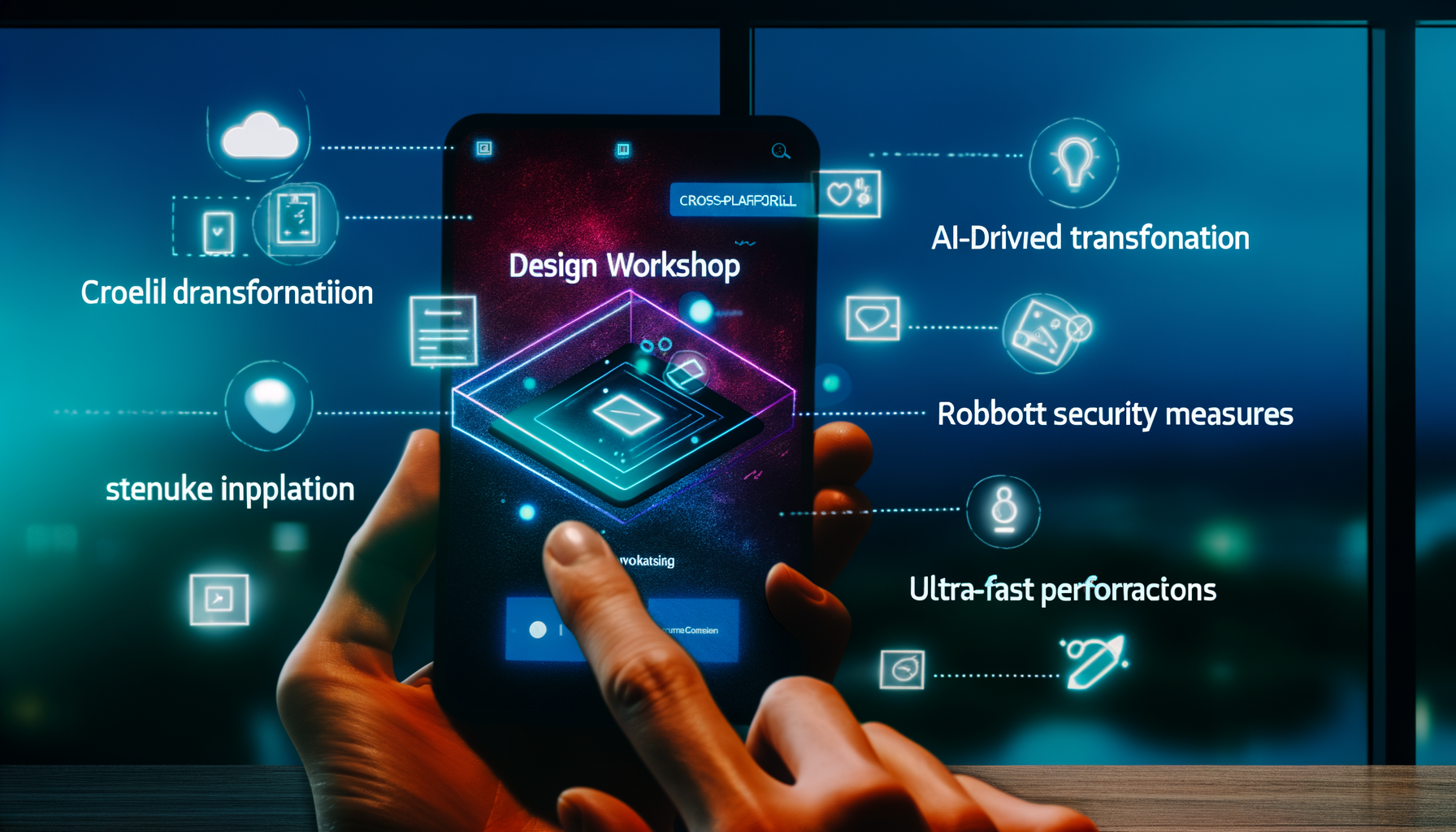
UX/UI design workshop in action.
Designing for cross-platform apps requires a keen understanding of user expectations and platform guidelines. Consistency across platforms is key to maintaining brand identity and user satisfaction. Utilizing adaptive design principles ensures your app looks and functions beautifully on any device.
Quicklook's design team emphasizes user-centered design, ensuring every touchpoint is intuitive and engaging. By focusing on seamless navigation, clear visuals, and accessible interfaces, we create apps that users love.
QUOTE
In 2025, design isn’t just about aesthetics; it’s about creating meaningful interactions.
Frequently Asked Questions
QWhat are the top cross-platform mobile app development frameworks in 2025?
QHow do AI and machine learning enhance cross-platform mobile apps?
QWhat role does 5G play in cross-platform mobile app development?
Conclusion
Cross-platform mobile apps are essential for staying competitive in 2025. By leveraging frameworks like Flutter and React Native, integrating AI, and embracing 5G, businesses can drive substantial ROI.
Future Vision
Stay ahead with strategies that adapt to technological advances.
Schedule your AI audit with Quicklook.